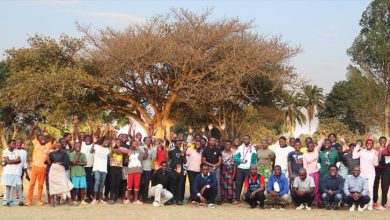
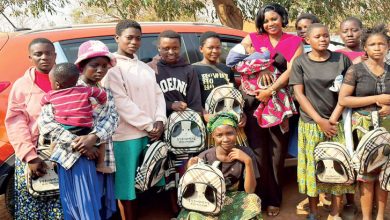
It a sunny Monday morning, the beginning of a new week of learning for about 1995 pupils at Nambande Primary School in Zomba.
By 5.30am, Clara Ngwale had already arrived at the rural school.
She is in Standard Eight and preparing for the Primary School Leaving Certificate of Education examinations.
She is like the nearly 2 000 learners at her school. They all keep time. At least, they don’t miss the start of the first class.

Clara returned to school two years ago after a two-year break out due to lack of motivation.
During the hiatus, she was burning and selling charcoal in the community surrounding the school, an illicit business that has left the area’s forests’ up in smoke.
Clara decided to re-enrol after realising that her peers who remained in school were better-off and looked healthier since they were receiving porridge for breakfast.
The school meals, served Monday to Friday, helped keep the children healthy and active in class even though district was hit hard by hunger triggered by the drought following the El Nino weather pattern.
Now she can eat twice a day even though her family did not harvest enough to feed them until the next harvesting season in April next year.
Most families in Malawi run out of food between October and April, but the prolonged dry spells that scorched crops in the Southern Region last growing season have left over five million in need of urgent food aid.
Clara says: “The rest of my family only eat once a day because there isn’t enough food at home.
“I feel lucky because on top of that meal, I get porridge at school.”
Nambande Primary School head teacher Richard Maganizo says Clara is one of many learners still in school and motivated by the school feeding programme.
“Dropout rates and late coming have decreased dramatically,” he says. “By 5:30am at least 500 learners are already on campus. As a result, the pass rate has also doubled to 88 percent in the recent PSLCE examinations.”
Only four of the 48 learners who sat the national examinations did not make it to secondary school, says Maganizo.
He states that the learners do not only arrive early for classes, but they are staying longer in class and scoring better in continuous assessments.
The feeding programme implemented by Emmanuel International is supported by the World Food Programme (WFP).
In 2021, the school embarked on the Homegwown School Feeding Programme for the good of the children and generations to come.
Community members volunteer as members of the school feeding committees, with some waking up as early as 1am to cook the porridge that makes Clara eager to go to school and excel.
Committee member Esther Pinifolo says the volunteers take turns to ensure no child learns on an empty stomach.
They place four giant pots on the fire just after midnight so that by 5am, the porridge seasoned with groundnut flour, vegetables and other foodstuffs is ready and simmering on a gentle fire.
Pinifolo says: “Our aim is to ensure that our children eat here at school and this is working very well for us.
“Where there is no food at home, we are sure that the child will have at least a meal at school.”
The homegrown school meals ensure sustainability by allowing the community participate in the production and preparation of the foodstuffs that their children eat.
At Nambande, a cooperative of women farmers supplies the foodstuffs that go into the 120-litre boiling pots.
By empowering the locals to supply their produce to the school-feeding programme, the women are economically empowered to take good care of their families and keep children in school.
WFP country representative Paul Turnbull says the school feeding guarantees vulnerable people access to nutritious meals, good health and education even during emergencies.
“School meals, as a programme, prevents children from dropping out of school. In an emergency like this, there is a tendency by children to leave school and go out to look for employment. Keeping the children in school is a very important part of this response,” he says.
The homegrown meals create a ready market for rural farmers.
Growers in villages surrounding Nambande Primary School have formed a cooperative to collectively utilise this market opportunity and supply the school with maize and vegetables.